Short-term rentals have transformed modern travel. Platforms like Airbnb, Vrbo, and Booking.com have made it easy for homeowners to rent out properties and for travelers to find unique, flexible accommodations. However, alongside their popularity, complaints about short-term rentals have steadily increased in many cities around the world.
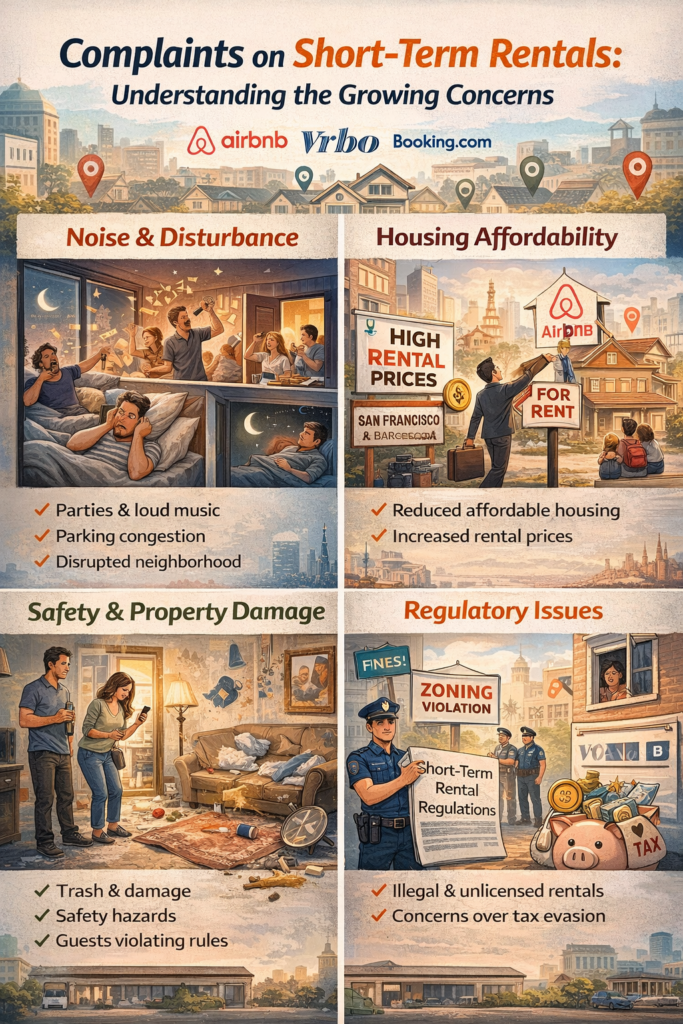
Understanding these complaints is important for hosts, guests, neighbors, and local governments alike.
- Noise and Disturbance in Residential Areas
One of the most common complaints comes from neighbors. Short-term rentals located in residential neighborhoods sometimes host large groups, parties, or late-night gatherings. Frequent guest turnover can create:
Loud music and celebrations
Increased foot traffic
Parking congestion
Disruptions to a normally quiet community
For long-term residents, this can feel like living next to a revolving-door hotel rather than in a stable neighborhood.
- Housing Affordability and Availability
In high-demand cities, property owners may convert long-term rental units into short-term rentals to earn higher profits. Critics argue this can:
Reduce the supply of affordable housing
Increase rental prices
Displace long-term tenants
Cities such as San Francisco and Barcelona have introduced strict regulations in response to housing concerns linked to short-term rental growth.
- Safety and Security Issues
Guests may file complaints about:
Misleading listings or inaccurate photos
Poor cleanliness standards
Lack of emergency contacts
Inadequate safety measures
Unlike hotels, which operate under standardized regulations, short-term rentals vary widely in quality and compliance. This inconsistency sometimes results in negative guest experiences.
- Property Damage and Rule Violations
Hosts also experience challenges. Some common complaints from hosts include:
Property damage
Unauthorized parties
Extra guests beyond booking limits
Theft of household items
Although platforms offer host protections, disputes over reimbursement can arise, leading to frustration on both sides.
- Regulatory and Legal Disputes
Local governments often struggle to balance tourism benefits with community protection. Complaints may involve:
Unlicensed operations
Tax evasion
Violations of zoning laws
Failure to comply with safety inspections
Cities worldwide continue to update policies to better manage short-term rental activity.
- Lack of Customer Support Resolution
Both guests and hosts sometimes report dissatisfaction with dispute resolution processes. Common concerns include:
Delayed responses
Automated or unclear decisions
Difficulty escalating complaints
When issues are not resolved quickly, trust in the platform can decline.
How Complaints Can Be Reduced
Addressing complaints requires shared responsibility:
- For Hosts
Set clear house rules
Screen guests carefully
Maintain high cleanliness and safety standards
Communicate proactively
2. For Guests
Respect neighborhood quiet hours
Follow house rules
Report issues promptly and honestly
3. For Platforms
Enforce listing standards
Improve verification systems
Strengthen dispute resolution processes
4. For Local Governments
Create balanced regulations
Ensure fair taxation
Protect housing supply
Conclusion
Short-term rentals offer flexibility, income opportunities, and unique travel experiences. However, complaints highlight real challenges that cannot be ignored. With thoughtful regulation, responsible hosting, and respectful guest behavior, short-term rentals can coexist more harmoniously with local communities.
If you’d like, I can also create a version focused specifically on complaints in a particular city or country.