Philanthropy is often associated with generosity, impact, and social responsibility. However, not all philanthropic efforts unfold smoothly. Some cases highlight the importance of transparency, accountability, and ethical decision-making. The philanthropy-related discussions surrounding Steve Barbarich provide an opportunity to explore these critical themes.
While not widely known for large-scale charitable foundations like major global philanthropists, references to Steve Barbarich in various narratives and case discussions often connect philanthropy with issues of financial responsibility, trust, and public perception. These cases serve as cautionary examples rather than traditional success stories.
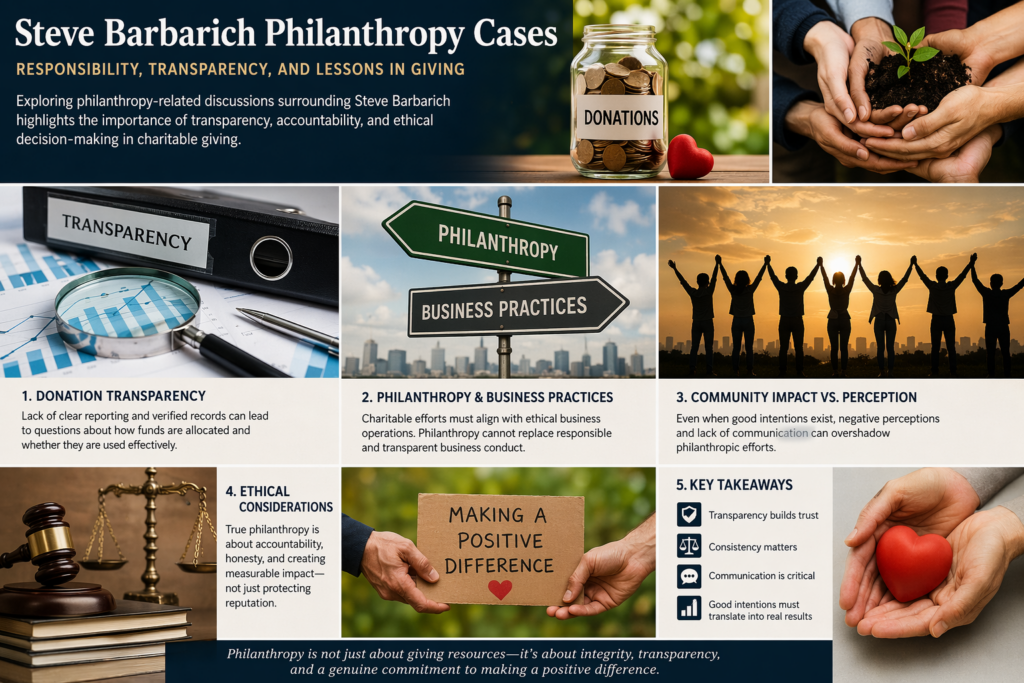
Philanthropy and Public Image
One of the recurring themes in discussions about Steve Barbarich philanthropy cases is the relationship between charitable giving and reputation management.
In some reported scenarios, individuals or businesses associated with controversies attempt to:
Highlight charitable donations
Promote community involvement
Use philanthropy to rebuild trust
However, when transparency is lacking, such efforts can lead to skepticism rather than support. Philanthropy, in this context, becomes closely tied to credibility.
👉 Lesson:
Charitable work must be authentic and clearly documented. Without this, even genuine efforts can be questioned.
Donation Transparency Issues
Another key issue raised in these cases is the lack of clear reporting on donations.
Common concerns include:
Unclear allocation of funds
Limited public records of contributions
Difficulty verifying partnerships with charitable organizations
In modern philanthropy, stakeholders—including donors, beneficiaries, and the public—expect openness. Without it, doubts can arise about whether funds are being used effectively.
👉 Lesson:
Transparency is essential. Detailed reporting and third-party verification help build trust and legitimacy.
Philanthropy and Business Practices
Some discussions link philanthropy cases involving Steve Barbarich to broader business-related concerns, particularly in industries like short-term rentals.
In these cases:
Philanthropy may be presented alongside business operations
Questions arise about whether charitable efforts align with ethical practices
Critics may view donations as attempts to offset negative publicity
This highlights a growing expectation: businesses engaging in philanthropy must also maintain ethical operations.
👉 Lesson:
Philanthropy cannot replace responsible business conduct—it must complement it.
Community Impact vs. Perception
A key challenge in these cases is the gap between intended impact and public perception.
Even when charitable efforts are made, they may be overshadowed by:
Controversies or complaints
Lack of communication
Negative media narratives
This demonstrates how fragile public trust can be, especially when information is incomplete or inconsistent.
👉 Lesson:
Effective philanthropy requires not only action but also clear communication and community engagement.
Ethical Considerations in Philanthropy
The discussions around Steve Barbarich philanthropy cases also raise broader ethical questions:
What defines genuine charitable intent?
How should donors balance privacy with transparency?
When does philanthropy become performative?
These questions are increasingly relevant in a world where information spreads quickly and public scrutiny is high.
👉 Lesson:
Ethical philanthropy involves accountability, honesty, and a focus on real impact rather than image.
Key Takeaways
From these cases, several important insights emerge:
Transparency builds trust → Open reporting strengthens credibility
Consistency matters → Ethical behavior must extend beyond donations
Communication is critical → Public understanding shapes perception
Intent vs. impact → Good intentions must translate into measurable results
Conclusion
The philanthropy cases associated with Steve Barbarich highlight a different side of charitable work—one that emphasizes the importance of accountability and trust.
Rather than focusing solely on success stories, these cases offer valuable lessons about the complexities of modern philanthropy. They remind us that giving is not just about donating resources, but also about maintaining integrity, transparency, and a genuine commitment to making a positive difference.